
When to Plug In a Block Heater: Temperature, Timing & Tips
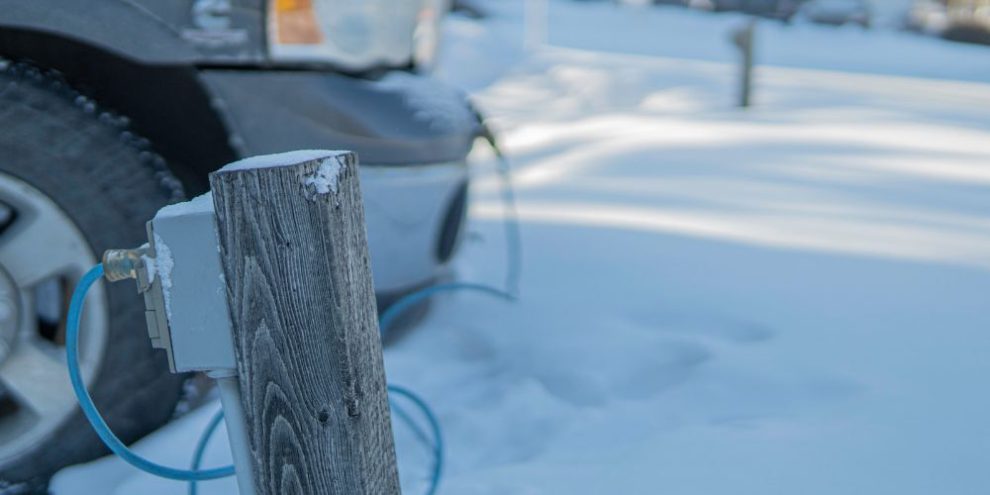
It's 7 a.m., it's -18°C and your car is making that slow, grinding "rrr... rrr... rrr" that every Ontario driver dreads. Meanwhile your neighbour's truck fires right up, with an orange cord dangling from the grille like a tail.
That cord runs to a block heater, and Ontario drivers have strong opinions about it. Some plug in every night all winter. Others swear their car has never needed it. Here's when to plug in, how long to leave it and whether you need one at all.
The short version: Plug in once it's -15°C or colder, for two to four hours, on a timer. Most modern cars will still start without one, but they work harder and wear faster doing it.
Snag Our Newsletter
Gas, Diesel or Electric: The Quick Answer
- Gas: Plug in at -15°C or colder.
- Diesel: Plug in. Diesel engines are more sensitive to cold than gas engines. A block heater is strongly recommended at -15°C or colder and essential below -20°C.
- Electric: You don't need one. EVs don't use a traditional block heater. They manage their own battery temperature and can precondition instead.
What a Block Heater Actually Does
A block heater is an electric heater for your engine. The most common kind warms the engine coolant, which heats the engine block and the oil. A warm engine starts more easily and gets up to operating temperature sooner.
The perks go past starting. A preheated engine puts less strain on mechanical parts, and the easier start draws less power from your battery. You also get heat in the cabin faster, with a plugged-in car warming up in just five or six minutes instead of 10.
RELATED: A warm car is great, but clear roads are even better ...
It saves gas, too. A block heater can improve fuel economy by up to 10 per cent at -20°C, and a single short trip at -25°C could use around 25 per cent less fuel.
Types of Block Heaters
Not every block heater works the same way. The main types:
- Core plug heater: The most common kind. It sits in the engine block in place of a core plug and warms the coolant directly.
- Dipstick heater: Slides into the dipstick tube to warm the oil from inside.
- Inline coolant heater: Installed in a radiator hose, warming the coolant as it passes through.
- Oil pan heater: Attaches to the outside of the oil pan, often with magnets, to warm the oil.
When to Plug In Your Block Heater
Here's a simple temperature guide, based on CAA's advice:
- Above -5°C: You can skip it.
- -5°C to -15°C: Nice to have. It makes starting easier.
- -15°C or colder: Plug in.
Does Barrie really get that cold?
Yes. As recently as January 2025, Environment Canada issued an extreme cold warning for Simcoe County, with a cold front making it feel like -30°C. Mornings like that are exactly what a block heater is for.
How Long to Leave It Plugged In
Not all night. Natural Resources Canada (NRCan) says two hours is more than enough. CAA suggests three to four hours, especially in deep cold, and says two hours isn't enough at -30°C.
A good rule of thumb is about two hours on an ordinary cold morning, and closer to four when it's brutally cold. Past that, you're mostly just adding to your hydro bill.
Do I Really Need a Block Heater?
It depends on your car, where you park and how cold it gets. A modern car will usually start at -30°C without being plugged in, according to CAA, but it runs harder and wears faster doing it.
You'll get the most out of one if:
- It regularly hits -15°C or colder where you live.
- You drive a diesel.
- You park outside overnight.
- You make a lot of short trips. That's where the fuel savings are biggest.
It matters less if:
- You park in a heated garage.
- You drive an electric vehicle.
- Your car sits for days at a time. If you only drive once or twice a week, a battery maintainer may help more than a block heater, especially with an older battery.
Does My Car Have One, and Is It Working?
Not sure if your car has one? Check your owner's manual or ask your mechanic. Many automakers install block heaters at the factory, but not every new vehicle comes with one, and some models can't take one at all.
If yours doesn't have one, CAA puts the heater at about $50 to $200, plus roughly $100 to $250 or more for installation.
To check that it's working, plug it in for a few hours, then carefully touch the engine block. It should feel warm, but never hot. Before you drive off, remember to unplug it. Pulling away with the cord still attached can damage it.
What It Costs to Run a Block Heater
Less than you might think. A typical block heater draws about 500 watts. Run for 150 hours in a month, it uses about 75 kWh, which is roughly $8 at average Ontario time-of-use
That's about five hours a night. Cut it to two or three with a timer and you cut the bill to match. It also lines up with off-peak pricing, which runs from 7 p.m. to 7 a.m. A block heater warming up before your morning commute falls right in that window.
Use a Timer (Seriously)
Nobody wants to run out to the driveway at 5 a.m. NRCan recommends an automatic timer set to switch the block heater on about two hours before you leave. A plug-in timer costs about $10 to $20. If you won't be driving for many hours, don't leave it plugged in.
Block Heater Myths
- "Leave it plugged in all night." No need. Two to four hours does the job.
- "Just idle the car to warm it up instead." Idling to warm up wastes fuel and creates pollution.
- "Modern cars don't need one." They'll usually start, but they work harder and wear faster in deep cold.
- "Any old extension cord will do." Use only cords rated for outdoor use, and stay within their wattage rating.
Plug In Safely
Extension cords and outlets can be a fire risk if they're misused. A few rules to follow:
- Never plug in inside a garage. Do it outside only.
- Use an outdoor-rated extension cord and stay within its wattage rating.
- Check the cord before each use. Replace it if the insulation is worn rather than taping it up. Swap it out if it's been run over or you drove off with it still plugged in.
- Don't coil the cord. Fully extend it, and don't run it under mats or rugs.
- One car per cord and per outlet. Don't overload either.
The Bottom Line
If it's -15°C or colder, plug in. Give it two to four hours, put it on a timer and use a proper outdoor cord. It costs a few bucks a month, and you won't be the one in the parking lot turning the key over and over while your neighbour drives away.
Warming up the car for the morning commute? Plug yourself in too: listen live to Rock 95 for the best classic rock and the hottest new rock.
Snag Our Newsletter
Hit that button like you’re pressing play on your favourite track. get exclusive content, stories, and news.
Related




Upcoming Concerts