
The 2026 Orionid Meteor Shower: When and Where to Watch From Ontario
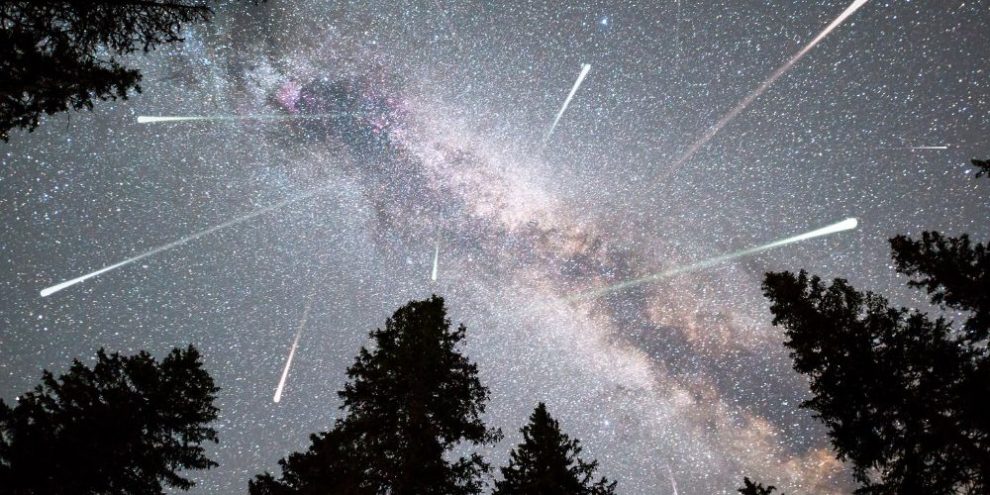
If you haven’t looked up yet, good news, you haven’t missed it!
Every fall, the Orionid meteor shower lights up the night sky, typically peaking in October and continuing into early November. That means there’s still time to bundle up, head somewhere dark and catch a few streaks of light. Every one of those streaks is a speck of dust from Halley’s Comet, one of the most famous comets in history.
Snag Our Newsletter
This guide covers what the Orionids are, how often you can see them, exactly when to look in 2026 and where to go in Ontario. It also has tips for staying warm, taking photos and planning your next stargazing night.
The Quick Answer
If you’re short on time, here’s the short version.
- Peak: The night of October 21 into the early hours of October 22. Some forecasts point to the morning of October 23, so the whole stretch is worth a look.
- Best time to watch: Roughly 4 a.m. until the sky starts to brighten, after the Moon sets.
- Where to look: Face east to southeast, away from the Moon, and take in as much of the sky as you can.
- How many you’ll see: Around 10 to 20 per hour under perfect dark skies. Moonlight cuts that down this year.
- Still active until: November 7.
- What you need: Warm clothes and a dark spot. No telescope or binoculars required.
What Is a Meteor Shower?
Let’s start with the basics. A few words get mixed up, so here’s how they work:
- A meteoroid is a small piece of space rock or dust, usually no bigger than a grain of sand or a pea.
- A meteor is the streak of light you see when a meteoroid hits Earth’s atmosphere and burns up.
- A meteorite is a piece that survives the trip and lands on the ground. Almost none of the Orionids do.
A meteor shower happens when Earth passes through a stream of debris left behind by a comet. We plow through the trail, and the tiny bits slam into our atmosphere at high speed. They burn up about 100 kilometres above the ground, and from the ground we see a quick bright flash.
All the meteors in a shower seem to come from one spot in the sky called the radiant. That’s the same effect you get driving through snow at night, where the flakes seem to stream toward you from a single point. Showers are named after the constellation where the radiant sits. For the Orionids, that’s Orion.
The Story Behind the Orionids: Halley’s Comet
The Orionids come from the most famous comet there is. Halley’s Comet circles the Sun about every 76 years, and it has been spotted by people for thousands of years. It was visible in 1066, the year of the Battle of Hastings, and it was famously stitched into the Bayeux Tapestry.
The comet is named for English astronomer Edmond Halley. In the early 1700s, he realized that bright comets seen in 1531, 1607 and 1682 were actually the same object returning on a regular schedule. He predicted it would return in 1758. He died in 1742, but the comet showed up right on time, and it was named in his honour. It was the first comet ever proven to return.
The last visit was in 1986, and the next is expected in 2061. So the only chance most of us get to see anything from Halley is the debris it leaves behind.
Here’s a fun twist: the dust you’ll see in the Orionids isn’t from the comet’s most recent trip. According to the UK Meteor Network, today’s meteors come from material shed hundreds of years ago. Halley’s current orbit doesn’t bring it close enough to Earth to leave fresh dust in our path. That means you’re watching very old comet dust burn up.
Halley also gives us a second shower each spring, the Eta Aquariids, which peak around May 5 and 6.
Why the Orionids Are Special
Compared with some showers, the Orionids are not the busiest. But they have a few things going for them:
They’re fast. Orionid meteors hit the atmosphere at about 66 kilometres per second, which is more than 237,000 kilometres an hour. That’s only a little slower than the Leonids, one of the speediest showers of the year. Earth meets the stream almost head-on, which is what makes them so quick.
They can leave glowing trails. Because they’re fast, many Orionids leave a faint, glowing trail that hangs in the sky for a second or two after the meteor itself is gone.
They can be bright. Every so often, an Orionid flares into a fireball, a meteor brighter than most stars. A bright one can even cut through moonlight.
They’re reliable. The Orionids show up every October, give or take a few days, and they’re one of the better showers of the fall.
They come with a little colour. Most Orionids look like white streaks, but now and then someone catches a hint of colour.
How Often Can You See the Orionids?
The Orionids happen once a year, every October. In 2026, they’re active from October 2 to November 7. They don’t switch on and off. Activity starts slowly, builds to a peak and then trails off.
The peak itself is gentle and broad. This is not a shower with one magic hour. The best viewing is spread across about a week centred on the peak, so the nights before and after the peak date are good bets too.
As for numbers, a perfect dark sky with no Moon can give you about 10 to 20 meteors per hour at the peak. Some sources say as high as 25. That works out to one every few minutes, with quiet stretches and sometimes a few at once. It’s a patient show, not a fireworks display.
In 2026, the Moon will cut that number down. We’ll get to that next.
When to Watch the Orionids in 2026
The Peak Dates
Most forecasts, including NASA and the International Meteor Organization, put the peak on the night of October 21 into the early morning of October 22. A few sources, citing the American Meteor Society, point to the morning of October 23. Since the peak is broad, the safest plan is to head out on any clear night this week.
The Moon Problem
There’s a catch this year. The Moon is a bright, waxing gibbous, about 80 per cent lit on the peak night, and the full Moon arrives in the early hours of October 26. Moonlight washes out the fainter meteors, so you’ll see fewer than in a dark-sky year.
The good news is that the Moon doesn’t stay up all night. Around the peak, it sets in the hours before dawn, around 4 a.m. in the Barrie area. Check a weather or astronomy app for the exact moonset time where you are, since it shifts by about 45 minutes or so each night.
A Night-by-Night Timeline
Here’s a rough plan for peak night, using Eastern Daylight Time:
Evening (8 to 10 p.m.): The Moon is bright in the southern sky and Orion hasn’t risen yet. Not much to see yet, but a great time to head out, set up and let your eyes adjust.
Late evening (10 p.m. to midnight): Orion appears over the eastern horizon. A few Orionids may show up, but the radiant is still low.
Midnight to 3 a.m.: Orion climbs higher and meteor numbers begin to build. The Moon is still up in the western sky, so look east and southeast, away from it. The brighter meteors and fireballs will still cut through.
About 4 a.m. until the sky brightens: This is the sweet spot. The Moon has set, Orion is high in the south, and the skies are as dark as they’ll get. Plan to be outside for at least an hour in this window.
Dawn (around 6 a.m. onward): The sky starts to lighten. Sunrise is around 7:40 a.m., so you’ll get a bonus sunrise if you stay out.
If you’re not a night owl, try the early morning instead of the middle of the night. Set an alarm for 3:30 or 4 a.m., grab a warm drink and head out. It’s the best bang for your effort.
What If You Miss the Peak?
Don’t worry. The shower runs through November 7, and the nights near the peak are very close in quality. After the full Moon on October 26, the Moon rises later and later each night, which opens up darker evenings again. By early November, the Moon is a thin crescent and dark skies are back, though the Orionids will be thinning out by then.
Where to Watch From Ontario
The golden rule is simple: get away from town lights. Streetlights, shopping plazas and sports fields wash out faint meteors, and you’ll see far more from a dark spot than from a city backyard. Even a short drive into the country helps.
RELATED: Discover one of Central Ontario's best stargazing spots...
Dark Sky Spots Near Barrie and Beyond
Torrance Barrens Dark-Sky Preserve (Muskoka). Designated in 1999, this conservation area was the world’s first permanent dark sky preserve. The open granite barrens give you a huge, unblocked view of the sky in every direction, which is perfect for meteors. It’s a drive north on Highway 11 into Muskoka. Check access rules before you go.
Bruce Peninsula National Park. On the shores of Georgian Bay, this park is known for its dark skies. Fathom Five National Marine Park sits right next to it. It’s a longer drive, but the sky is worth it.
Algonquin Provincial Park. A bit of a trek, but the skies are outstanding. Check road and gate access first, since parks change their hours and services in the fall.
Farther afield. If you’re travelling, there are other great dark sky sites across Ontario, including Point Pelee in the southwest, the Lennox and Addington Dark Sky Viewing Area and North Frontenac in the east, and Quetico Provincial Park in the northwest.
Join the Music Jury
Get StartedCloser to Home
No time for a road trip? That’s fine. Here’s what to look for:
- A rural road, farm field or lakeshore with a wide, open view of the eastern and southeastern sky
- A spot with no streetlights, porch lights or buildings in your line of sight
- A place with safe parking and legal access
Even a backyard in the city can work if you turn off the lights and block nearby glare. You’ll see fewer meteors, but the brightest ones will still shine through.
What to Check Before You Go
- Cloud cover. Clouds are the one thing that will wreck the night. Check the forecast the evening before and again before you head out.
- Access and hours. Parks and conservation areas may have limits on night entry. Confirm before you leave.
- Hunting season. In the fall, hunting seasons are open in some rural parts of Ontario. Stick to designated parks and conservation areas, and wear something bright or reflective if you’re on foot.
- Let someone know. Tell a friend where you’re going and when you expect to be back, especially if you’re heading somewhere remote.
How to Find Orion
You don’t need to find Orion to see the meteors. They can appear anywhere in the sky. But knowing where the radiant is helps you figure out where to point yourself.
Here’s how to find the constellation:
- Face east in the late evening, or south toward dawn.
- Look for three bright stars in a short, straight row. That’s Orion’s Belt, and it’s the easiest part of the constellation to spot.
- Above and to the left of the belt is Betelgeuse, a bright orange-red star marking the Hunter’s shoulder.
- Below and to the right is Rigel, a brilliant blue-white star marking the Hunter’s foot.
- The Orionid radiant sits near the Hunter’s upraised arm, just north of Betelgeuse.
Here’s the trick: don’t stare directly at Orion. Meteors near the radiant look short, because they’re heading almost straight toward you. The longest, most dramatic streaks show up about 45 to 90 degrees away from the radiant. So pick a comfortable spot, lean back and take in as much of the sky as you can.
If you’d like help finding your way, a free stargazing app on your phone can point out Orion and track the Moon. Turn the screen brightness and colours down so you don’t ruin your night vision.
What to Bring
A little preparation makes a big difference. Here’s a checklist:
- Warm layers. October nights in Ontario are cold, and you’ll be sitting still for a while. Bring a hat, gloves, wool socks and a winter coat, and add a blanket or sleeping bag.
- A reclining chair or blanket. Lying back is much easier on your neck than staring straight up.
- A hot drink. A thermos of hot chocolate, coffee or tea goes a long way.
- Snacks. You’ll be out for a while.
- A red flashlight. Red light keeps your night vision intact, while white light ruins it.
- Hand and toe warmers. Cheap and very worth it.
- A fully charged phone. For maps, weather and emergencies, but keep it in your pocket.
- Bug spray. Probably not needed in late October, but good to have if it’s an unusually warm night.
Tips for a Better View
Give your eyes 20 to 30 minutes. Night vision takes time to kick in, and a quick glance at a bright screen resets the clock. Be patient.
Look away from the Moon. Keep your back to it, or tuck yourself behind a tree or building.
Don’t use binoculars or a telescope. They shrink your field of view, and you want as much sky as possible. Your eyes are the best tool for the job.
Stay put. Meteors can be few and far between. Give yourself at least an hour, and don’t pack up too early.
Keep it low-key. Talk quietly, keep the lights off, and let everyone’s eyes adjust.
Bring a friend. Two sets of eyes see more, and it’s a lot warmer.
How to Photograph the Orionids
You can capture meteors with a phone or a camera, but it takes some trial and error. Here’s how to give yourself the best shot:
With a camera:
- Use a sturdy tripod.
- Pick a wide-angle lens and open the aperture as wide as it will go, ideally f/2.8 or lower.
- Set the ISO to around 1600 to 3200.
- Use an exposure of 15 to 25 seconds. Longer than that, and stars begin to trail.
- Focus manually on a bright star or a distant light, and set the focus to infinity.
- Turn on continuous shooting or use an intervalometer to take shot after shot.
- Frame the shot to include Orion and a foreground, like trees or a lake.
- Bring a spare battery. Cold drains them quickly.
With a phone:
- Use Night Mode or a long-exposure setting.
- Rest the phone on a tripod or a steady surface.
- Turn off the flash.
- Take many shots. You won’t know until you check later if you caught one.
Be realistic. Many photographers take hundreds of frames to capture a single good meteor. If you don’t get one, you’ll still end up with a great shot of the night sky.
Keep Looking Up: What to Watch After the Orionids
The sky doesn’t stop after the Orionids. Here’s a look at the rest of the season:
Southern Taurids (peak around November 4 and 5). A slow shower that’s not very busy, but famous for the occasional bright fireball. The Moon is only about 18 per cent lit then, so conditions are much better.
Northern Taurids (peak around November 9 to 12). The Taurids overlap, so watching in early November gives you two showers at once.
Leonids (peak around November 17 and 18). Known for rare, spectacular meteor storms in the past, and still a good shower most years. The Moon will be fairly dim for it.
Geminids (peak December 13 and 14). The big one. The Geminids are usually the best shower of the year, and they can produce around 75 meteors an hour. In 2026, they peak under a waxing crescent Moon, which makes for nearly ideal conditions. Mark your calendar.
The Rock 95 Stargazing Playlist
A night under the stars deserves a soundtrack. Here are a few classic picks for the drive out, or for the speakers once you’ve found a spot:
“Shooting Star” by Bad Company. The obvious one, and it never gets old.
“Starman” by David Bowie. Perfect for staring into space.
“Rocket Man” by Elton John. A late-night classic.
Catch It Before It’s Gone
The Orionids come once a year, and the best of this year’s show is happening right now. Grab a blanket, pick a dark spot and look up. You might see a piece of Halley’s Comet that’s been drifting through space for centuries.
Orionid Meteor Shower FAQ
No. Meteors streak across a huge part of the sky, and telescopes and binoculars only show a tiny patch. Your eyes are all you need.
Not the comet itself. What you’ll see are tiny pieces of dust that the comet left behind, burning up in our atmosphere. The comet itself won’t be back until 2061.
Check the forecast and have a backup night. The Orionids are active for weeks, so you can try again on a clearer night, even if it’s a bit after the peak.
Under ideal conditions, you might see around 10 to 20 per hour. With the Moon this year, expect fewer. Be patient, give yourself an hour or more, and the brightest ones will still stand out.
Absolutely, as long as they’re bundled up and it’s not too late for them. A blanket, a thermos and a few snacks make it an adventure. The earlier part of the night is more kid-friendly, though the meteors are best before dawn.
Eastern Daylight Time. Ontario’s clocks fall back on November 1, so check the time if you’re watching after that.
Snag Our Newsletter
Hit that button like you’re pressing play on your favourite track. get exclusive content, stories, and news.
Related




Upcoming Concerts