Rock Rewind: Fleetwood Mac, the Band That Survived Everything
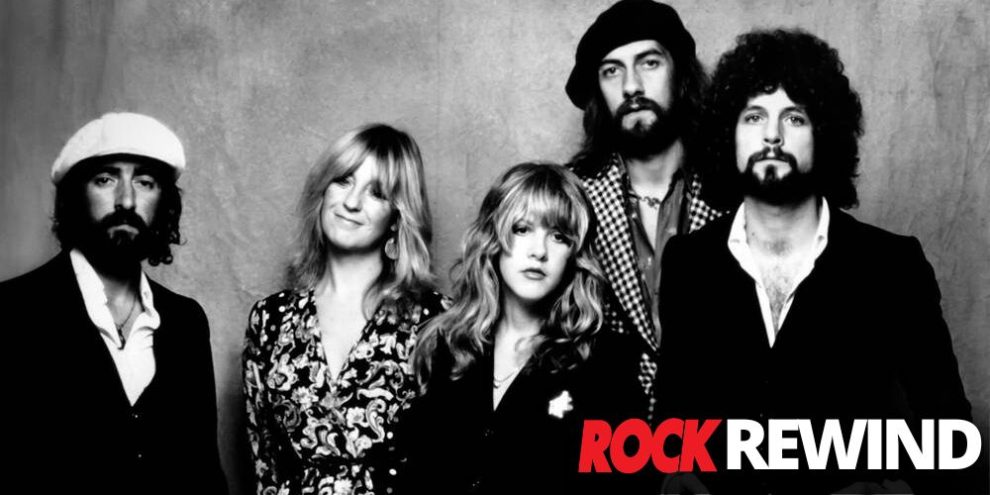
Few bands have lived through as much as Fleetwood Mac. They started as a British blues band, lost a founding genius, rebuilt in California and made one of the best-selling albums ever recorded. Then they spent decades breaking up, reuniting and making up all over again.
Snag Our Newsletter
Now the story is getting another chapter. Fleetwood Mac: The Chain, the band’s first fully authorized documentary, is set to premiere on Apple TV on January 29, 2027, just ahead of the 50th anniversary of Rumours. Lindsey Buckingham has also said he and Stevie Nicks are “talking all the time” again.
This Rock Rewind covers all of it: who’s in the band, where it started, every lineup change and the albums that define it.
Meet Fleetwood Mac
Fleetwood Mac has had more than a dozen members over the years. Here’s who matters most.
The classic lineup (1974 to 1987):
- Mick Fleetwood: drums (the band’s namesake and constant)
- John McVie: bass (the other half of the name)
- Christine McVie: keyboards, vocals (1970 to 1998, 2014 to 2022)
- Stevie Nicks: vocals
- Lindsey Buckingham: guitar, vocals
Key earlier members:
- Peter Green: guitar, vocals (founder, 1967 to 1970)
- Jeremy Spencer: slide guitar, vocals (1967 to 1971)
- Danny Kirwan: guitar, vocals (1968 to 1972)
- Bob Welch: guitar, vocals (1971 to 1974)
- Bob Weston and Dave Walker: guitar and vocals (1972 to 1973)
- Bob Brunning: bass, for the very first gigs in 1967
Later members:
- Billy Burnette and Rick Vito: guitar (replacing Buckingham after 1987)
- Mike Campbell (of Tom Petty and the Heartbreakers) and Neil Finn (of Split Enz and Crowded House): guitar and vocals (2018 to 2022, replacing Buckingham)
In memoriam: Danny Kirwan died in 2018, Peter Green died in 2020 and Christine McVie died on November 30, 2022. Bob Welch and Bob Weston both died in 2012.
Fleetwood Mac at a Glance
- Origin: London, England (1967), later based in California
- Sound: British blues, then melodic soft rock and pop rock
- Biggest album: Rumours (1977), with more than 40 million copies sold worldwide
- Honours: Rock and Roll Hall of Fame (1998), a Brit Award for Outstanding Contribution to Music, and the 1978 Grammy for Album of the Year
- Famous for: harmonies, breakups and some of the most dramatic backstories in rock
The Origin Story: A Blues Band Named After Its Rhythm Section
The story starts with John Mayall’s Bluesbreakers, one of the leading British blues bands of the 1960s. Guitarist Peter Green got his friend Mick Fleetwood hired as the drummer, and the rhythm section became Fleetwood and bassist John McVie.
Mayall gave Green some free studio time as a gift. Green, Fleetwood and McVie used it to record several songs, including an instrumental Green named after his rhythm section: “Fleetwood Mac.” The “Mac” is short for McVie.
In July 1967, Green left the Bluesbreakers and formed a new band, taking the name with him. McVie wasn’t ready to leave Mayall’s steady paycheque, so Green and Fleetwood recruited slide guitarist Jeremy Spencer and bassist Bob Brunning, who agreed to step aside if McVie ever came around.
The band made its debut on August 13, 1967, at the Windsor Jazz and Blues Festival, billed as “Peter Green’s Fleetwood Mac featuring Jeremy Spencer.” Within weeks, John McVie joined for good.
The early years belonged to Green. In 1968, 18-year-old Danny Kirwan joined as a third guitarist, and the band scored a UK number one with the instrumental “Albatross.” Green also wrote “Black Magic Woman,” which Santana later made famous, and the heavy, haunting “The Green Manalishi (With the Two-Prong Crown),” his last hit with the band.
Green’s mental health was deteriorating, and he left in 1970. It was the first major crisis in a band's history, a history that would be full crises.
Lineup Changes: The Revolving Door
Fleetwood Mac’s lineup history is one of the wildest in rock. Here’s how it unfolded.
1967: Green, Fleetwood and Spencer form the band. Bob Brunning plays bass at the first gig, and John McVie takes over within weeks.
1968: Danny Kirwan joins as the third guitarist. Christine Perfect, who sang with the blues band Chicken Shack, contributes as a session musician. She later marries John McVie.
1970: Peter Green leaves. Christine McVie officially joins in July, two months later.
1971: Jeremy Spencer leaves in dramatic fashion. During a US tour, he walked out of the band’s Los Angeles hotel, supposedly to get a magazine, and never came back. He had joined a religious group called the Children of God. Green briefly returned to finish the tour, and American guitarist Bob Welch joined afterward.
1972: Danny Kirwan is fired after an argument backstage. Bob Weston and singer Dave Walker are brought in.
1973: Walker leaves, and Weston is fired after an affair with Fleetwood’s wife. The band relocates to the United States the next year.
1974: In one of the strangest chapters, the band’s own manager claimed he owned the Fleetwood Mac name and sent a fake lineup on tour. The real band’s road manager worked one show before he realized the group on stage wasn’t the real thing. Bob Welch leaves by the end of the year.
December 1974: Mick Fleetwood, scouting studios in Los Angeles, hears a record by a folk-rock duo called Buckingham Nicks. He asks guitarist Lindsey Buckingham to join, and Buckingham agrees on one condition: Stevie Nicks comes too.
1987: Buckingham leaves after Tango in the Night. Billy Burnette and Rick Vito step in.
1990s: More changes follow, with Dave Mason and Bekka Bramlett joining and leaving. The classic lineup reunites in 1993 to play Bill Clinton’s first inauguration and fully reunites in 1997.
1998: Christine McVie steps away.
2014: Christine rejoins for the “On with the Show” tour.
2018: Buckingham is fired after a disagreement over touring. Mike Campbell and Neil Finn join.
2022: Christine McVie dies, and the band goes quiet.
RELATED: Relive their first show with Buckingham and Nicks ...
Key Albums
Fleetwood Mac (1975)
Sometimes called “The White Album,” the first record with Buckingham and Nicks was a game changer. It topped the Billboard 200, spent more than a year in the top 40 and sold more than five million copies in the US.
It introduced a more melodic, pop-rock sound and gave the band several radio hits, including Nicks’s “Rhiannon” and Christine McVie’s “Say You Love Me” and “Over My Head.” It also included Nicks’s “Landslide,” one of the most beloved songs in rock.
Rumours (1977)
This is the one. Rumours came out on February 4, 1977, and it’s one of the best-selling albums of all time, with more than 40 million copies sold worldwide. It sold more than 10 million copies in its first month and spent 31 weeks at number one in the US. It won Album of the Year at the 1978 Grammys.
The backstory is part of the legend. The band recorded it in 1976 at the Record Plant in Sausalito, California, in a windowless studio that became something of a pressure cooker. While they worked, everyone’s relationships were falling apart: John and Christine McVie split, Buckingham and Nicks broke up, and Mick Fleetwood and his wife Jenny Boyd separated. They kept making music together, and the songs became about each other.
Four singles reached the US top 10: “Go Your Own Way,” “Dreams” (their only US number one), “Don’t Stop” and “You Make Loving Fun.” Album tracks like “The Chain,” “Gold Dust Woman” and “Songbird” are staples of classic rock radio. “The Chain” is the only song on the record credited to all five members. The album’s working title was Yesterday’s Gone.
Tusk (1979)
How do you follow Rumours? You make something wildly strange. The double album Tusk was largely driven by Buckingham’s experimental streak, and it cost more than $1 million to make, reportedly the most expensive rock record of its time.
It didn’t match Rumours in sales, but it still sold millions and reached number one in the UK. The title track, featuring a marching band, reached the US top 10, as did Nicks’s “Sara.”
Mirage (1982)
A softer, more polished follow-up, Mirage returned to number one in the US for five weeks. Hits included “Gypsy,” “Hold Me” and “Love in Store.”
Tango in the Night (1987)
The classic lineup’s last big album together was also one of its most successful. Tango in the Night sold more than 15 million copies worldwide and topped the UK chart. Singles included “Big Love,” “Little Lies” and “Everywhere,” with “Seven Wonders” also getting big radio play.
Buckingham reportedly meant it to be his final album with the band, and he left after it was finished.
The Dance (1997)
After a decade apart, the Rumours lineup reunited for a concert special and live album, released on August 19, 1997. It debuted at number one on the Billboard 200 and included a new acoustic version of “Landslide,” which became an adult-contemporary hit. The band was inducted into the Rock and Roll Hall of Fame in 1998.
Say You Will (2003)
The band’s last studio album to date was also the first in 16 years to feature both Buckingham and Nicks. Christine McVie sat most of it out, but the record still reached the top 10 in the US.
The “Dreams” Comeback
In 2020, a 15-second TikTok video gave Fleetwood Mac a surprise second wind. Idaho resident Nathan Apodaca, whose truck had broken down, skateboarded to work drinking Ocean Spray Cran-Raspberry juice and lip-syncing to “Dreams.” The video went viral.
“Dreams” returned to the Billboard Hot 100 at number 21, its first appearance since 1977 and the band’s first top-40 appearance in 30 years. Mick Fleetwood and Stevie Nicks both recreated the video, and Nicks did hers on roller skates. Ocean Spray even gave Apodaca a new truck, filled with juice.
Stevie Nicks and the Rock Hall
Stevie Nicks was inducted into the Rock and Roll Hall of Fame with Fleetwood Mac in 1998, and again as a solo artist in 2019. She was the first woman to be inducted twice. Her songs from the Fleetwood Mac era, including “Rhiannon,” “Dreams,” “Gold Dust Woman” and “Landslide,” are still some of the most-played tracks on classic rock radio.
What’s Next for Fleetwood Mac?
After Christine McVie’s death, Nicks said she saw no reason to continue the band without her. But the story isn’t finished.
In 2026, Lindsey Buckingham said the band’s upcoming documentary has been a “healing process” and that he and Nicks are “talking all the time” again. He has also hinted that 2027 should be “pretty interesting” and that “quite a few things will reveal themselves,” though he hasn’t confirmed any reunion or new music.
What is confirmed: Fleetwood Mac: The Chain, directed by Frank Marshall, premieres on Apple TV on January 29, 2027. It features Mick Fleetwood, John McVie, Christine McVie (through archival material), Lindsey Buckingham and Stevie Nicks, and it covers the story from 1974 to today. The 50th anniversary of Rumours arrives on February 4, 2027.
RELATED: Here's what to know about their upcoming documentary..
Keep the Music Going
From blues in London to harmonies in California, Fleetwood Mac has soundtracked more than half a century of rock history. Their songs still sound like nothing else on the radio.
Fleetwood Mac FAQ
The classic lineup is Mick Fleetwood, John McVie, Christine McVie, Stevie Nicks and Lindsey Buckingham. Founder Peter Green led the band’s early blues years. The last lineup (2018 to 2022) included Mike Campbell and Neil Finn in place of Buckingham.
Peter Green named the band after his rhythm section: drummer Mick Fleetwood and bassist John McVie. “Mac” is short for McVie.
Rumours, released in 1977, with more than 40 million copies sold worldwide.
The band hasn’t toured or released new music since Christine McVie died in 2022, and Nicks has said she doesn’t want to continue without her. There’s no official reunion announced, though Buckingham and Nicks have reconnected.
Danny Kirwan (2018), Peter Green (2020) and Christine McVie (2022). Former members Bob Welch and Bob Weston both died in 2012.
Snag Our Newsletter
Hit that button like you’re pressing play on your favourite track. get exclusive content, stories, and news.
Related

Upcoming Concerts