Rock Rewind: The Full History of Rush band members
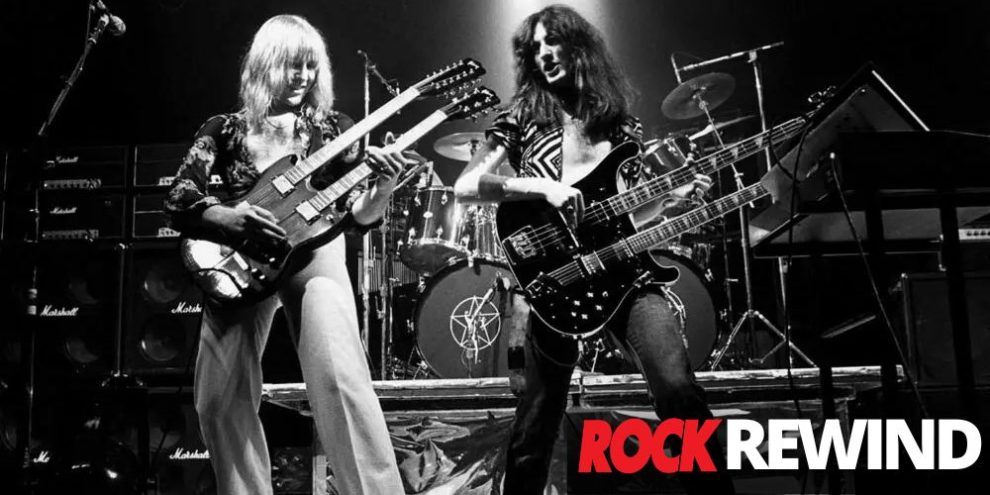
Most rock bands get one career. Rush had several. Rush's band members began their career in Willowdale, where they started as a bar band before becoming a prog trio writing 20-minute songs, then a radio staple with "Tom Sawyer." More than 50 years later, they're touring again.
This Rock Rewind covers the Rush band members past and present, where they started, how the lineup changed, the albums that matter and why Geddy Lee and Alex Lifeson are back on the road.
Snag Our Newsletter
Jump to: Band Members | Origin Story | Neil Peart Joins | Hit Albums | Full Discography | Honours | The Fifty Something Tour
Rush Band Members: Who's in the Band
Rush had a few different players pass through in its first years, but for almost all of its history the band was the same three people. Here's who they are.
The Classic Trio (1974 to 2015)
These three recorded every Rush album from 1975 onward and played every show until the band stopped touring in 2015.
- Geddy Lee, lead vocals, bass and keyboards. Joined a few weeks after the band formed in 1968 and has been the voice of Rush ever since.
- Alex Lifeson, guitar. A founding member and Lee's childhood friend.
- Neil Peart, drums, percussion and lyrics. Joined in 1974 and wrote most of the band's words. He died in 2020.
The Early Members (1968 to 1974)
Two early Rush band members helped get things started but left before the band found its audience.
- John Rutsey, drums. A founding member who played on the first album, then left in 1974. He died in 2008.
- Jeff Jones, bass and vocals. A founding member who was replaced by Lee within weeks.
A few others had short stints before the first album: Lindy Young (keyboards and other instruments, 1969), Joe Perna (bass, 1969), Mitch Bossi (rhythm guitar, 1971 to 1972) and Gerry Fielding, who filled in on drums for Rutsey in late 1973.
The Fifty Something Touring Band (2026 to 2027)
Rush's current tour features the two surviving members plus two touring musicians.
- Geddy Lee, bass, keyboards and vocals
- Alex Lifeson, guitar and vocals
- Anika Nilles, drums
- Loren Gold, keyboards
Nilles and Gold are touring players, not official members. More on them below.
The Origin Story: Willowdale, Toronto
Rush formed in August 1968 in Toronto's Willowdale neighbourhood. The first lineup was Alex Lifeson on guitar, Jeff Jones on bass and John Rutsey on drums. Jones didn't last long. In September 1968, Lifeson asked his childhood friend Geddy Lee to take over on bass and vocals. The core of the band was set.
The group worked the Toronto scene for years. Their first single, a 1973 cover of Buddy Holly's "Not Fade Away," went nowhere. Rather than wait on a record deal, the band started a label of its own called Moon Records and put out its self-titled debut in March 1974.
That album was stalling too, until a Cleveland radio station called WMMS added "Working Man" to its playlist. Mercury Records picked the record up for the United States and sales took off. One of Canada's most Canadian bands owes its first big break to a radio station in Ohio. Fittingly, the band later recorded a live album in that same city.
The Big Lineup Change: Neil Peart Joins
After the debut, Rutsey left the band in 1974. His replacement turned out to be the most important hire in Rush's history.
Neil Peart was born in Hamilton and grew up on a dairy farm near Hagersville, then in St. Catharines, where he started drum lessons at 13. At 18 he moved to London, England looking for fame and fortune. He found neither. As he later put it, "I was seeking fame and fortune, and found anonymity and poverty. But I learned a lot about life." He came home in 1972, working at his father's farm equipment dealership and drumming in local bands on the side.
In July 1974 he auditioned for what was, to him, an unknown Toronto band. He got the job and joined Rush on the eve of their first American release and tour. He played on the second album, Fly by Night (1975). He also wrote most of its lyrics, a job he kept for the rest of the band's career. From that point on, the lineup of Lee, Lifeson and Peart never changed.
The Breakthrough: 2112 (1976)
Rush released two albums in 1975, Fly by Night and Caress of Steel. The real breakthrough came in 1976 with 2112, built around a 20-minute title track in seven sections. It went platinum in Canada. The tour that followed wrapped with three nights at Massey Hall in Toronto, which the band recorded for its first live album, All the World's a Stage.
Rush then headed to Rockfield Studios in Wales to make A Farewell to Kings (1977) and Hemispheres (1978). Both pushed further into progressive rock. "As our tastes got more obscure, we discovered more progressive rock-based bands like Yes, Van der Graaf Generator and King Crimson, and we were very inspired by those bands," Lee has said. "They made us want to make our music more interesting and more complex."
The Hit Albums
Permanent Waves (1980)
Rush shortened the songs and let in some reggae and New Wave. Permanent Waves reached the Top Five in the United States. Its first single, "The Spirit of Radio," entered the Billboard Hot 100 at No. 51. The Rock and Roll Hall of Fame later named it one of its 500 Songs That Shaped Rock and Roll. If you've ever wondered what a Rush song sounds like when it's built for radio, this is the place to start.
Moving Pictures (1981)
This is the one. Moving Pictures reached No. 3 and has sold more than four million copies. "Tom Sawyer" leads it off, with music by Lee and Lifeson and lyrics by Peart and Pye Dubois, who happens to be the lyricist for fellow Ontario band Max Webster. The album also carries "Red Barchetta," "YYZ" and "Limelight," which is a lot of radio hits for one record.
Signals (1982) and the Synth Years
With Signals, synthesizers moved to the front of the sound. The album gave Rush its only Top 40 single in the United States, "New World Man." Grace Under Pressure (1984), Power Windows (1985) and Hold Your Fire (1987) followed in the same vein. The band spent less time on the road through the rest of the 1980s, but the albums kept going gold or platinum.
Back to the Guitar (1989 to 1996)
By Presto (1989), guitar was taking the lead again. Roll the Bones (1991), Counterparts (1993) and Test for Echo (1996) kept pushing that way, with the keyboards slipping further into the background on each one.
The Hiatus and the Return
After the Test for Echo tour, Rush went quiet in 1997 for what became a five-year break, brought on by personal tragedies in Peart's life.
The band came back with Vapor Trails in 2002, the first Rush album since the 1970s with no keyboards on it at all. A covers EP called Feedback marked the 30th anniversary of the debut album in 2004, with the band playing songs by Cream, the Who and the Yardbirds, the groups that got them started. Snakes & Arrows (2007) and Clockwork Angels (2012) followed. Clockwork Angels turned out to be the band's final studio album, and Peart later co-wrote three novels with science fiction author Kevin J. Anderson set in its steampunk world.
The Full Rush Discography
Nineteen studio albums and one covers EP over 38 years. According to rush.com, the band's run of 24 gold and 14 platinum records puts Rush third behind only the Beatles and the Rolling Stones for the most consecutive gold or platinum albums by a rock band.
- Rush (1974)
- Fly by Night (1975)
- Caress of Steel (1975)
- 2112 (1976)
- A Farewell to Kings (1977)
- Hemispheres (1978)
- Permanent Waves (1980)
- Moving Pictures (1981)
- Signals (1982)
- Grace Under Pressure (1984)
- Power Windows (1985)
- Hold Your Fire (1987)
- Presto (1989)
- Roll the Bones (1991)
- Counterparts (1993)
- Test for Echo (1996)
- Vapor Trails (2002)
- Feedback (2004, covers EP)
- Snakes & Arrows (2007)
- Clockwork Angels (2012)
The live catalogue is almost as long, from All the World's a Stage (1976) and Exit... Stage Left (1981) through Rush in Rio (2003), Time Machine 2011: Live in Cleveland and the final R40 Live (2015). Each member also recorded on his own: Lee released My Favourite Headache in 2000, Lifeson released Victor in 1996 and Peart produced two volumes of Burning for Buddy, a tribute to big-band drummer Buddy Rich, in 1994 and 1997.
The Honours
Canada got there first. Rush was inducted into the Canadian Music Hall of Fame in 1994, and on May 9, 1996 the three members became Officers of the Order of Canada, the first rock group to receive the honour as a group. The Canadian Songwriters Hall of Fame followed in 2010, and in 2012 the band received the Governor General's award for the arts, the country's highest artistic honour.
The Rock and Roll Hall of Fame took longer. Rush had been eligible since 1998, but the band was never put forward until the class of 2013, the first year fans were allowed a say in the voting. They got in on that first try. Dave Grohl and Taylor Hawkins of Foo Fighters did the inducting. The band played it cool. "It's a terrific honor and we'll show up smiling," Lee told Rolling Stone. "It made my mom happy, so that's worth it." Lifeson was blunter with the Canadian Press: "I never really cared if it happened or not, to be honest with you." Peart was later added to the Percussive Arts Society Hall of Fame in 2020.
The band has sold more than 40 million records and has a star on the Hollywood Walk of Fame.
R40 and the Loss of Neil Peart
Rush marked 40 years with the R40 Live tour in 2015. The final show was August 1, 2015 at the Forum in Los Angeles. Peart announced his retirement afterward. He settled into a quiet life at home with his wife Carrie and daughter Olivia, writing, driving his classic cars and spending summers at his lake house in Quebec.
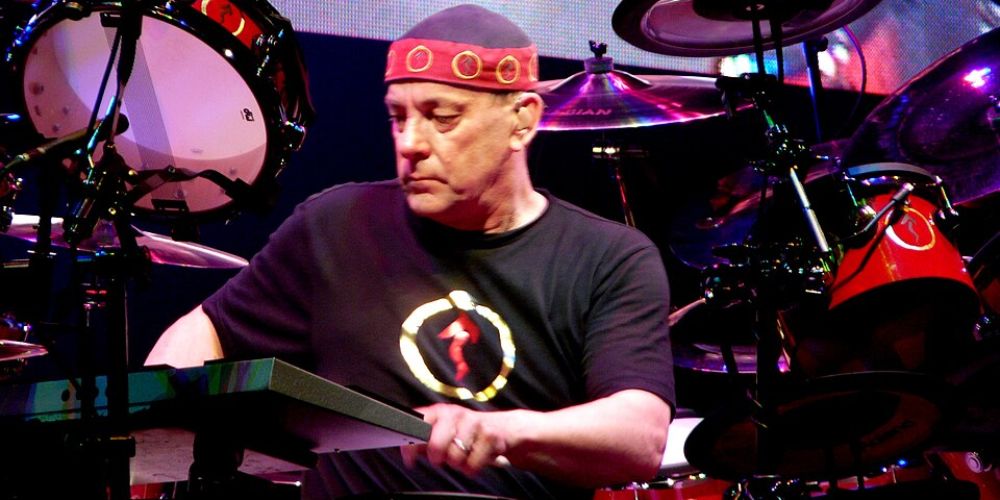
About a year into retirement he was diagnosed with glioblastoma, an aggressive brain cancer. He died at home in Santa Monica on January 7, 2020. Fans later rallied behind a memorial to him at Lakeside Park in St. Catharines, the park he wrote about in the song of the same name.
The Fifty Something Tour
For a decade, the answer to "will Rush ever play again?" was no. Then on October 6, 2025, Lee and Lifeson announced they would tour as Rush again. In his statement, Lee said the pair had done some serious soul searching and decided they missed it. It was time, he said, to celebrate "50-something years of RUSH music."
He also acknowledged that Peart was irreplaceable and introduced Nilles as the drummer who would take on that near-impossible role. Peart's widow Carrie Nuttall-Peart and daughter Olivia Peart issued a statement supporting the tour.
The tour opened June 7, 2026 at the Kia Forum in Los Angeles, which happens to be the same building where the classic lineup played its last show. The band says the first 22 dates sold out immediately. By the time the 2027 dates were announced in February 2026, the North American run had grown to 58 shows in 24 cities with more than half a million tickets sold. The same announcement added keyboardist Loren Gold, who has toured with the Who and Roger Daltrey, to expand the sound and, in Lee's words, free up the two of them. "Both Alex and I are loving the hours of rehearsal time we're spending with Anika and now Loren," Lee said at the time.
Each show runs two sets drawn from a pool of around 40 songs, so no two nights are the same. The band played four nights at Scotiabank Arena in Toronto in August 2026. The tour heads to South America, the United Kingdom and Europe in early 2027, with the last listed date on April 10, 2027 in Helsinki.
RELATED: The tour was so popular they added two more Toronto dates...
The announcement came with Rush 50, a 50-track anthology that opens with the first reissue of the 1973 debut single and closes with the last song Lee, Lifeson and Peart played together at the Forum.
Why Rush Still Matters
Rush never chased trends and never softened the music to get on the radio. Radio came around to them anyway. Three musicians from Ontario built one of the biggest live acts in rock on hard touring, long songs and a fan base that stayed for life. The Rock and Roll Hall of Fame credits them with influencing metal, alternative, punk and even hip-hop.
The Fifty Something tour isn't a replacement for what the band was. Lee and Lifeson have been clear about that. It's a tribute to Neil Peart and a chance for fans to hear these songs played live one more time, with a new drummer adding a chapter of her own.
Your Turn
What's your favourite Rush era: the prog epics, the Moving Pictures years or the synth-heavy '80s? Let us know.
Want more Rush and the best classic rock all day long? Catch the spirit of radio: listen live to Rock 95 and turn it up.
FREQUENTLY ASKED QUESTIONS
Yes, in a new form. Geddy Lee and Alex Lifeson revived Rush for the Fifty Something tour, which began in June 2026 and continues into 2027.
Two. Geddy Lee and Alex Lifeson are both alive and touring. Neil Peart died in 2020, and original drummer John Rutsey died in 2008.
Alex Lifeson, John Rutsey and Jeff Jones were the 1968 founding lineup. Geddy Lee replaced Jones within weeks, so Lee and Lifeson are usually counted as the originals.
The classic trio, yes: Lee and Lifeson were childhood friends in Toronto and Peart was born in Hamilton. Touring drummer Anika Nilles is German and touring keyboardist Loren Gold is American.
Anika Nilles, a German drummer who played more than 60 shows as Jeff Beck's drummer and has released four solo albums, is on the kit for the Fifty Something tour. She is a touring musician rather than an official third member.
Snag Our Newsletter
Hit that button like you’re pressing play on your favourite track. get exclusive content, stories, and news.
Related

Upcoming Concerts